Ships are larger, ports are tighter, and the pressure on every assist is climbing. The Carrousel Rave Tug is designed to answer all five through greater vessel control.
Each trend creates a different operational pressure. The same four-part structure shows the shift, its consequences, and how the CRT responds.
Scale
Vessels have outgrown their ports
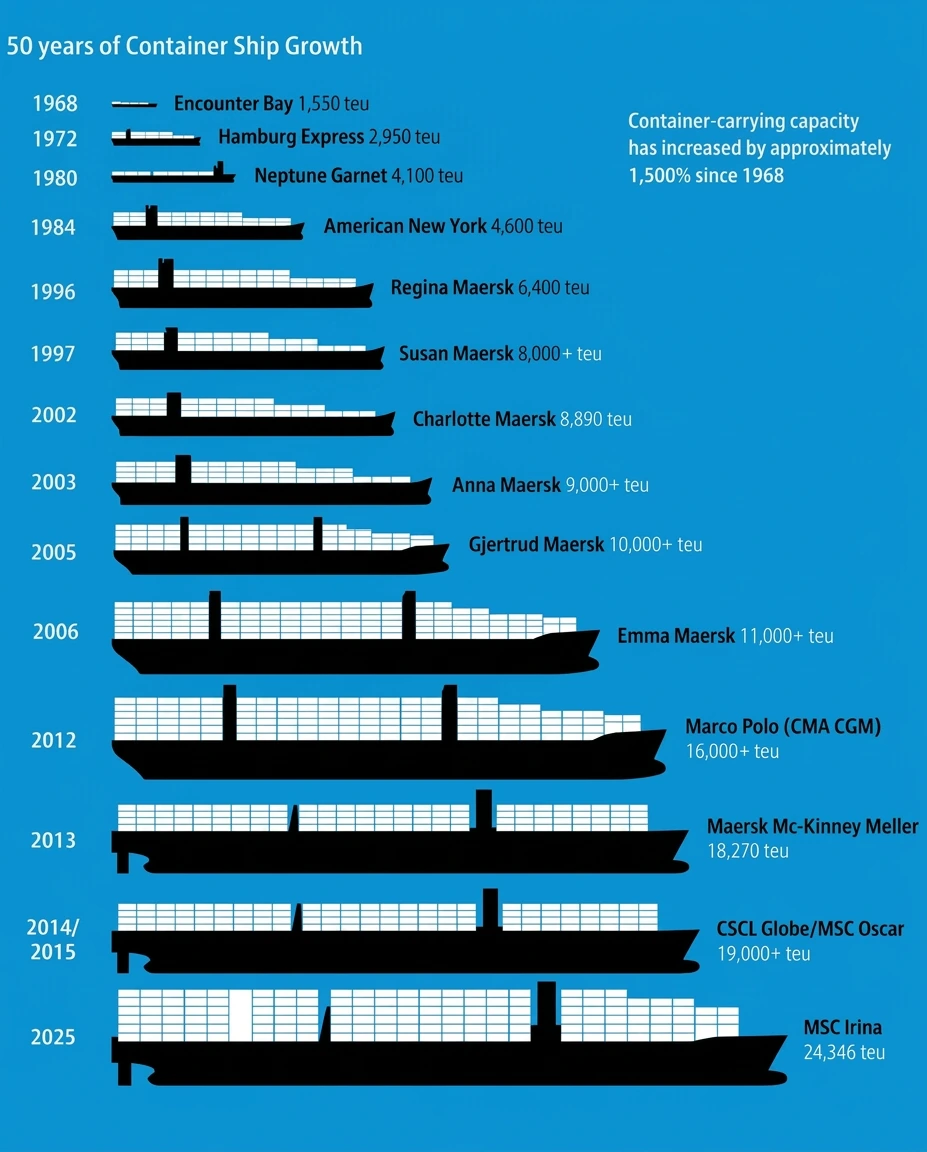
Container-carrying capacity has expanded roughly fifteenfold since 1968. Vessel classes have grown faster than turning basins, berth geometry, and access channels can be rebuilt.
Larger ship callsMore cargo per movement, with less room for correction.
Infrastructure lagFixed infrastructure cannot adapt as quickly as ship classes evolve.
Control in tighter marginsTowage must create more steering and braking authority in less space.
How the CRT responds
Hydrodynamic braking and steering give crews more control in tight spaces, helping ports extend the useful capacity of existing infrastructure.
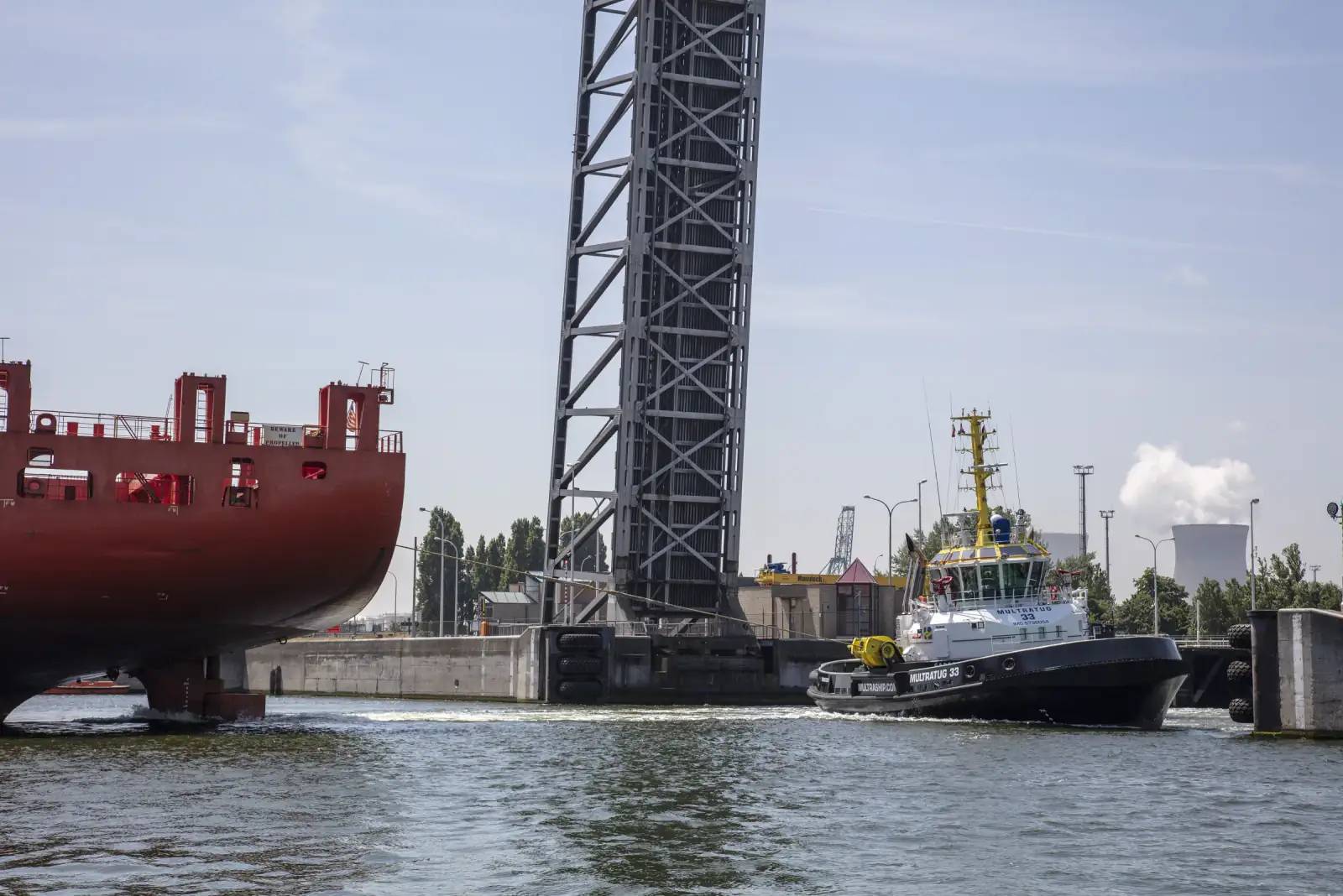
The maritime transport chain depends on efficient flow. Large merchant ships steer well while they have way through the water, yet confined and congested port waters force them to slow.
Turnaround pressureThe sooner a vessel returns to sea, the better for the logistics chain.
Steering needs wayLarge vessels lose steering authority as their speed falls.
Control during movementThe assist must add control without needlessly sacrificing momentum.
How the CRT responds
The CRT can generate braking and steering forces while the assisted vessel is moving, maintaining control without relying only on static pulling power.
ControlWhile the assisted vessel keeps way
Safety
Vessel control and tug stability are inseparable
A tug exposed to transverse towline load can be pulled into a girding situation. At the same time, loss of control over a large vessel in a sensitive location can disrupt an entire port network.
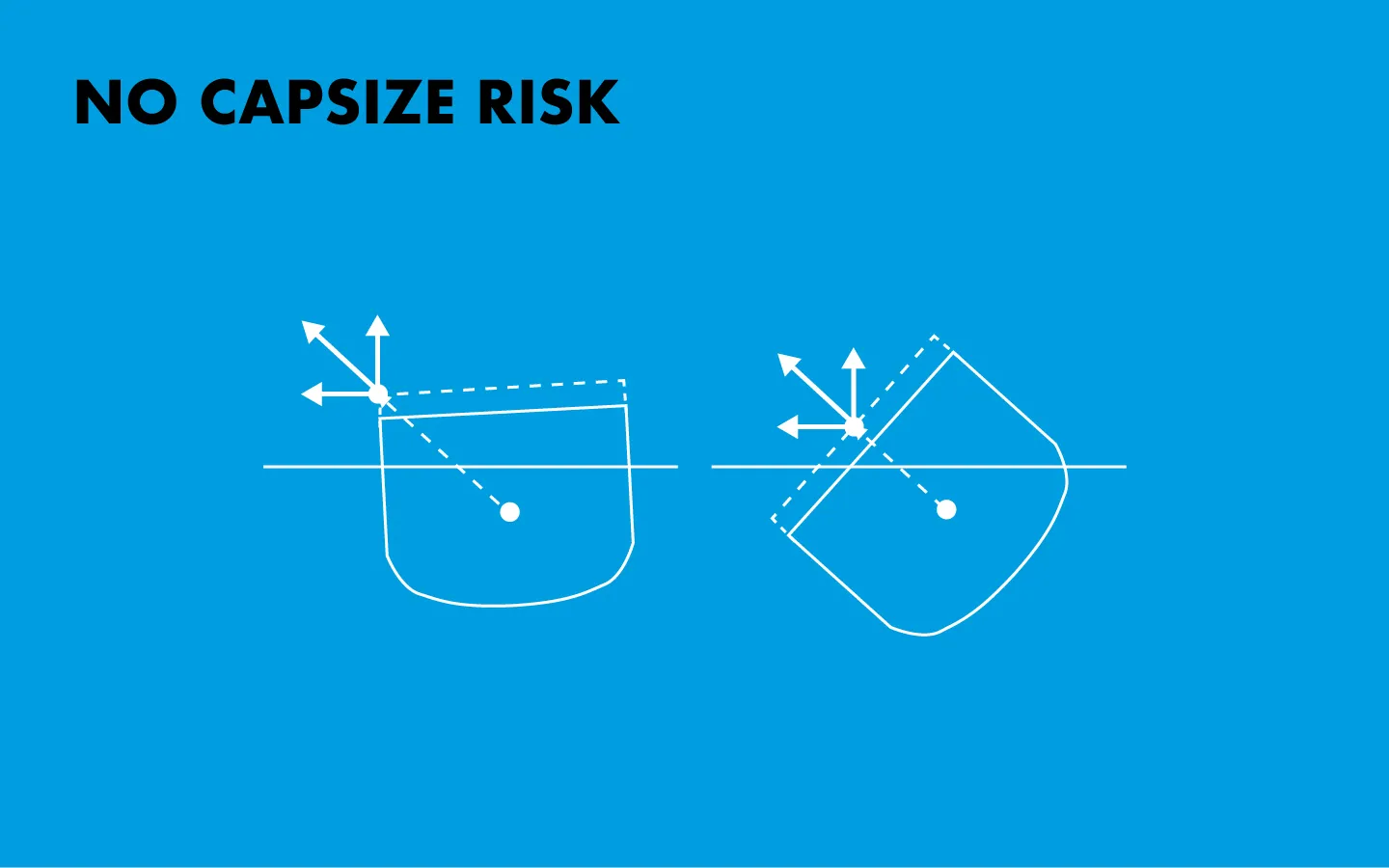
Girding riskTransverse towline load can capsize a conventional tug.
Network exposureA blocked port affects far more than a single vessel call.
Control where it countsConfined waters require dependable authority over the assisted ship.
How the CRT responds
The towing point moves freely around the Carrousel ring. This eliminates the mechanical cause of girding, so the CRT cannot capsize under transverse towline load.
360°Freely rotating towing point
Sustainability
Fuel use and emissions are under pressure
Reducing fuel consumption and harmful emissions is a worldwide priority. In conventional towage, generating more towing force generally requires more propulsion power.
Power carries a fuel costForce made through propulsion places a direct load on fuel consumption.
Wear and maintenanceHeavy propulsion loading also affects machinery and maintenance demand.
Operational performanceFuel and emissions increasingly shape fleet and port decisions.
How the CRT responds
The CRT uses its hull to generate hydrodynamic towing forces. Depending on configuration and operating method, this can reduce the propulsion power needed for an assist.
Hull forcePropulsion primarily controls heading and position
Energy transition
Reduce the energy requirement before sizing the battery
Round-the-clock electric towage starts with the energy required across each job. When the CRT uses hydrodynamic hull forces for braking and steering, it can reduce propulsion demand, depending on its configuration and operating method.
For the same duty profile, lower energy use per assist can reduce the battery capacity and shore-charging power required. That can lower battery mass, volume and cost, making continuous electric operation more practical.
Hydrodynamic hull forceWater flow contributes to braking and steering.
Lower propulsion demandEngines or motors do less of the force-generating work.
Lower energy per assistThe operating cycle requires less supplied energy.
Smaller energy systemBattery capacity and charging demand can be lower for the same duty profile.
Actual battery sizing also depends on peak power, operating schedule, charging windows, reserve margins, climate and battery degradation. A fully electric regenerative CRT remains a development concept.
Smartness
Connected assistance keeps people in control
Shipping is making greater use of connected information systems. For towage, the practical opportunity is computer-assisted operation with experienced crews still responsible for decisions.
Operational dataConnected systems can make performance visible and comparable.
Human in the loopJudgement remains with the crew where it matters most.
Continuous improvementA measurable platform supports better methods over time.
How the CRT responds
The CRT provides a platform for computer-assisted, human-in-the-loop systems that support crews without removing operational responsibility.
HumanRemains in the operational loop
How the CRT handles large vessels
See how the freely rotating towing point and hydrodynamic hull forces provide control during an assist.
Five pressures. One technical conversation.
If these pressures shape your operation, discuss where greater vessel control could change the constraints.