Summary
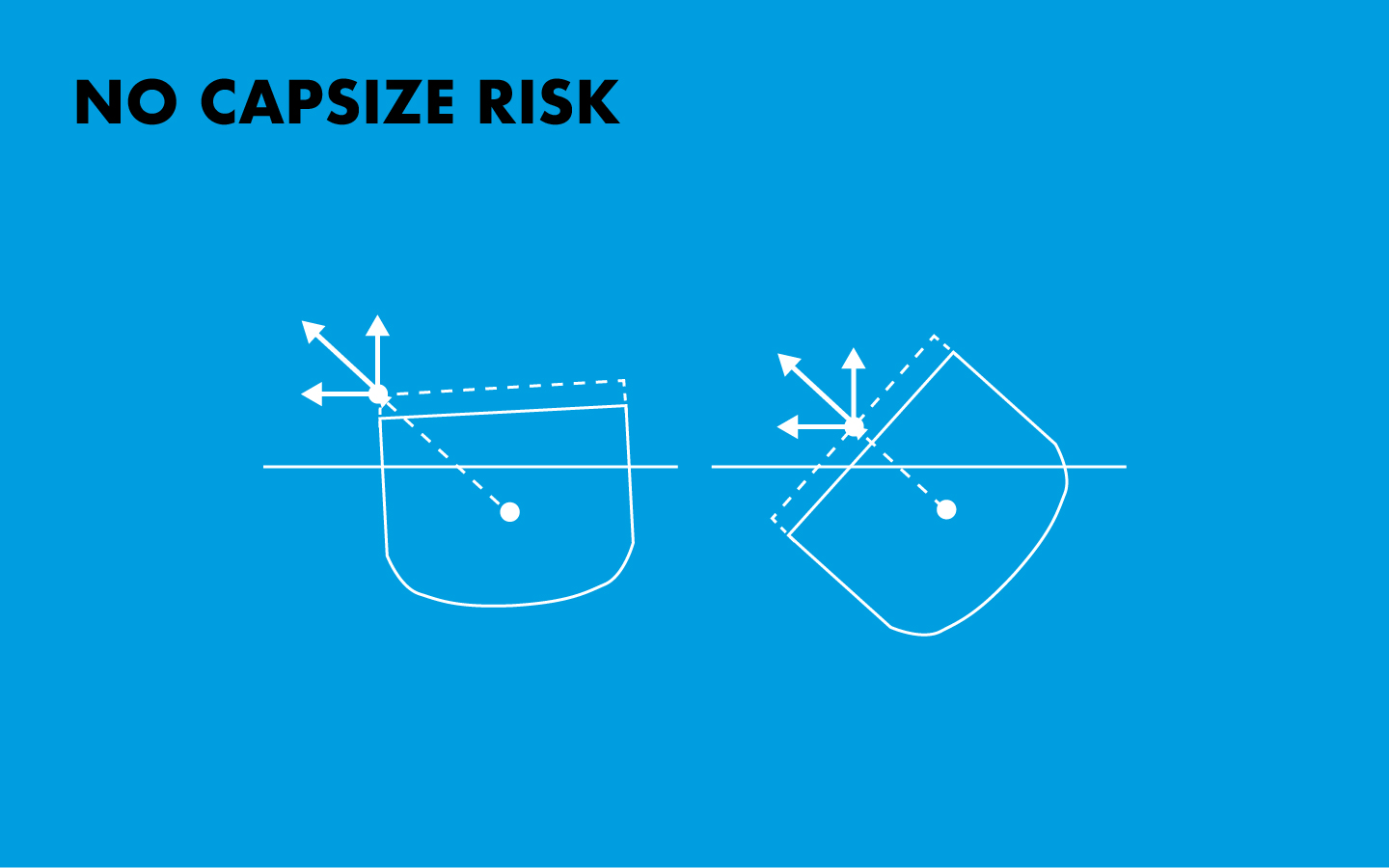
Tug girding occurs when towline force acts across a tug rather than substantially along its fore-and-aft axis. The force can turn the tug broadside, create a powerful heeling moment and leave propulsion or steering unable to recover the vessel. Once the deck edge immerses, hydrodynamic drag and downflooding can accelerate the loss of stability. Official investigations show that the transition can be extremely fast, but they do not support one universal time-to-capsize figure. [S1] [S2] [S6] [S8]
Girding is therefore not simply a matter of insufficient engine power. It is a dynamic interaction between towline angle, towing-point position, vessel speed, hull resistance, stability, communication and the behavior of the assisted vessel or tow.
Key takeaways
- Girding begins with unfavorable towline geometry, not with capsize itself.
- Speed and momentum determine how quickly the tug can be overtaken or pulled sideways.
- The towing point affects both maneuverability and the turning or heeling moment created by the line.
- Gob ropes, gog ropes and towing pins can reduce risk, but moving the effective towing point aft also restricts maneuverability. An incorrect setting may provide neither adequate protection nor full maneuverability.
- Emergency release systems are a final safeguard, not a substitute for avoiding the girded position.
- Planning, agreed speed and communication between tug, pilot and assisted vessel are essential operational controls.
What does tug girding mean?
In the investigated accidents, girding developed when a towline began exerting a broadside or athwartships force on the tug. Instead of the tug controlling the direction of the towline load, the tug’s movement became dominated by the tow or assisted vessel. [S6] [S8]
That distinction matters. Bollard pull alone does not determine vulnerability if the towline force acts at an unfavorable angle. Engine power, steering and stability must overcome a load that is now trying to rotate and heel the tug at the same time. [S6] [S8] [S9]
The North Arm Venture investigation provides a clear example. The barge approached the tug’s stern at an approximate right angle. The shortened towline pivoted until its force acted athwartships, and the tug capsized to starboard. [S6]
In the George H Ledcor accident, the loaded barge began to overtake the lead tug. The towline was not held by hold-down gear and started exerting broadside force. The tug heeled, its deck edge and bulwarks submerged, drag increased, and it rapidly capsized. [S8]
The mechanical sequence from towline load to capsize
1. The tug loses favorable position
The sequence often starts with a speed or course mismatch. A powered ship may increase ahead speed while a connected tug is still positioned for a low-speed maneuver. A barge may retain momentum and fail to follow the tug’s turn. In multi-tug work, an assist tug may also change the turning forces acting on the tow. [S1] [S6] [S7] [S8] [S9]
The critical issue is whether the tug can remain ahead of, behind, or correctly aligned with the moving load. Once the assisted vessel or tow begins to overtake the tug, the safe operating margin can collapse quickly.
2. The towline moves toward the beam
As the relative positions change, the towline angle sweeps across the tug. The line then applies both a turning force and a transverse load. If that moment exceeds what the tug’s propulsion and steering can counter, the tug is pulled sideways. [S6] [S8] [S9]
This is why the towing point is important. Guidance and investigations emphasize keeping the effective towing point in a position that limits overturning moment and preserves maneuverability. The Adonis investigation found that retrospectively fitted H-bitts moved the effective towing point aft and adversely affected the tug’s maneuverability during the accident scenario. [S9]
3. Heel increases and the hull adds resistance
The transverse towline force creates heel. As the deck edge or bulwarks enter the water, the immersed structure creates additional drag. That drag can reinforce the heeling action and make recovery more difficult. [S8]
Propulsion is not always enough to correct the situation. On George H Ledcor, the master’s application of full rudder and throttle increased heel under the combined effects of propeller thrust, river flow and towline force. [S8] The lesson is case-specific but important: an intuitive recovery action may have a different effect once the tug is already constrained by the towline.
4. Downflooding removes the remaining margin
Open doors, hatches and vents can allow water to enter as heel increases. The Domingue investigation identified open doors and hatches among the safety issues. [S7] Downflooding reduces reserve buoyancy and stability, accelerating the transition from severe heel to capsize and sinking.
Watertight integrity does not prevent the initial girting force, but it can influence whether a tug survives the resulting heel long enough for recovery or rescue.
Why speed and communication matter
There is no single safe speed that applies to every tug, tow and port. The reports do, however, show a consistent relationship: greater relative speed and momentum increase the forces involved while reducing the time available to reposition or release the tow. [S8] [S9]
In the Domingue accident, the assisted container ship briefly maneuvered ahead to avoid a mooring dolphin. The pilot did not warn the tug before the ship built ahead speed. Domingue girted and capsized. [S7]
The Asterix and Biter investigations also connect the accident sequence to the assisted vessel’s movement, the tug’s position and failures in shared awareness or communication. [S1] [S2] The Biter report describes a rapid capsize that left insufficient time to release the towlines, demonstrating how little recovery time may remain once broadside loading has begun. [S1]
Official port and competence guidance therefore emphasizes planning, communication, agreed operating limits and familiarity with the capabilities of the tug being used. [S4] [S5]
What gob ropes and gog ropes can and cannot do
A gob or gog rope changes the effective lead of the towline by holding it closer to the stern. This can prevent the line from sweeping freely across the beam and reduce girting risk, but the resulting aft towing point also restricts the tug’s ability to turn freely. [S1] [S2]
The protection depends on correct design and use. Asterix’s gog rope was set at an intermediate length. The MAIB found that it was neither short enough to move the towing point sufficiently aft to prevent girting nor long enough to preserve maximum maneuverability. Under load, the arrangement also could not be adjusted rapidly and safely. [S2]
The practical lesson is not simply “fit a gog rope.” The equipment, setting, maneuver, speed and crew training must work as one system.
Why emergency release is not a complete answer
Towline release is essential, but accident reports show why it cannot be the primary control.
During the George H Ledcor capsize, severe heel prevented the master from reaching one abort button, while another attempted activation did not release the winch brake. [S8] On Asterix, the force required to operate the manual release increased under towline load. [S2] On Adonis, the crew did not release the towline before capsize, although later testing did not establish a simple equipment failure explanation. [S9]
These cases involve different systems and failure modes. Together, they support a cautious conclusion: the window for emergency release may be extremely short, and the system must remain identifiable, reachable and functional under heel and load.
What the Novatug incident data shows
The Novatug dashboard API returned 432 records when accessed on 26 August 2026. Of these, 175 were marked as tug incidents. Within that tug subset, 88 records had a type containing girding or capsizing terminology. This broad group includes confirmed girding capsizes, other capsize mechanisms, unknown mechanisms and near capsizes. [S10]
The narrower Capsize girding category contained 48 records and 36 recorded fatalities. These figures describe the contents of Novatug’s researched dataset at the access date. They are not global industry totals and should not be read as an incidence rate. [S10]
The inclusion rules, classification decision tree, source hierarchy and limitations are set out in How the Novatug Maritime Incident Dataset Is Built. That page is the canonical reference for this snapshot and should be updated before any later dataset figures replace it.
How the Carrousel approach changes the geometry
The independent accident reports explain the danger created when a conventional towing point and towline geometry allow high transverse loading. Novatug’s product response should be assessed separately from that evidence.
Novatug describes the Carrousel Towing System as a freely rotating steel ring around the tug’s hull. The towing point follows the towline around the vessel instead of remaining fixed at one conventional location. Novatug’s technical claim is that this removes the fixed transverse towline geometry that causes girting and prevents capsize under towline load. [S11]
This section is Novatug’s technical positioning, not a conclusion made by the accident investigators cited above. The relevance is direct, however: the design targets the recurring mechanical sequence identified across the investigations.
Frequently asked questions
Is girding the same as any tug capsize?
No. Girding is a specific mechanism involving towline load pulling the tug into a dangerous broadside or constrained position. Tugs can capsize for other reasons, including stability problems, flooding, collision or hydrodynamic interaction.
Can a powerful tug still become girded?
Yes. Girting depends on force direction, geometry, stability and relative motion, not engine power alone. More power does not automatically correct an unfavorable towline angle.
Does a gog rope eliminate girding risk?
No. It can reduce the risk by controlling the towline lead, but its effectiveness depends on its position, length, design and use. Incorrect setup can also reduce maneuverability. [S1] [S2]
How fast can a tug capsize after becoming girded?
There is no universal figure. The Biter investigation describes a rapid capsize with insufficient time to release the towlines, while the George H Ledcor investigation states that the tug rapidly capsized after its deck edge and bulwarks submerged. [S1] [S8] The defensible conclusion is that the available recovery time can be extremely short.
Sources
- [S1] UK MAIB, Girting and capsize of tug Biter, 2024, updated 2026.
- [S2] UK MAIB, Girting and capsize of the tug Asterix, 2016.
- [S4] UK Department for Transport, A guide to good practice on port and marine facilities, 2025.
- [S5] UK MCA, Competence standards for general towage endorsement, 2023.
- [S6] Transportation Safety Board of Canada, North Arm Venture, M09W0141, 2010.
- [S7] UK MAIB, Domingue and CMA CGM Simba, Report 16/2017.
- [S8] Transportation Safety Board of Canada, George H Ledcor, M18P0230, 2019.
- [S9] Australian Transport Safety Bureau, Adonis, 286-MO-2011-005, 2013.
- [S10] Novatug, Maritime dashboard incidents API, accessed 26 August 2026.
- [S11] Novatug, Carrousel Rave Tug technical page.
Explore the girding research in Novatug’s maritime wiki, review the maritime incident dashboard, read how escort tugs control large vessels at speed, or see how the Carrousel Rave Tug changes towing geometry.